
Personalised Learning Paths in Intimate Settings
We believe that every student possesses a unique cognitive profile, yet traditional, overcrowded classrooms often force a “one-size-fits-all” approach that leaves many children behind. When we reduce the class size, we create a fertile learning environment where teachers can pivot their instruction to meet the specific needs of each individual learner and their unique learning styles. In these small classes, educators can identify exactly where a student is struggling with a mathematical concept or failing to grasp a nuanced historical context within the International Baccalaureate Diploma Programme or other pre-university education tracks. This intimacy allows for immediate adjustments to teaching and learning materials, whether that means providing advanced materials for gifted students or offering scaffolded support for those with special educational needs. We see this play out in real time as teachers move from desk to desk, engaging in microconversations that facilitate learning progress and bridge the gap between confusion and clarity. This personalised teaching ensures that personalised learning is not just a buzzword but a daily reality that improves student learning outcomes. The result is a bespoke educational experience that honours the student’s pace rather than the constraints of a rigid curriculum timeline, effectively closing learning gaps before they widen.
Strengthening Teacher-Student Bonds and Mentorship
The relationship between an educator and a student is the cornerstone of academic success, and teacher-student relationships flourish most naturally when the student-teacher ratio is kept low. We have observed that in small classes, teachers are not just instructors but become mentors who understand the emotional and social drivers behind a student’s performance and personal development. They learn the names of their students’ pets, their favourite hobbies, and the specific anxieties that might hinder their participation during university entrance exams. This deep level of teacher-pupil relationships builds a foundation of trust, making students feel safe enough to take intellectual risks during science investigations or higher-level mathematics. In the long term, these mentors can provide more tailored recommendation letters and guidance that truly reflect the student’s character and potential. Students are significantly more likely to reach out for student support when they feel their teacher is a known ally rather than a distant authority figure in an overcrowded classroom. This synergy transforms the classroom environment from a place of passive consumption into a vibrant community of mutual respect and social-emotional growth.

Maximising Active Participation and Peer Engagement
In a massive lecture hall, it is remarkably easy for a quiet student to disappear into the background and remain silent for an entire semester, but a low student-to-faculty ratio changes everything. We find that small class sizes effectively eliminate the “back row” phenomenon, as every student is physically and intellectually closer to the centre of the classroom interaction. Because there are fewer voices competing for airtime, each individual has more frequent opportunities to voice their opinions and practice their communication skills. This constant classroom engagement keeps students mentally sharp and prepared, as the likelihood of being called upon is high. Beyond just speaking more, students in these environments learn the art of active listening and develop strong peer relationships and peer connections during group projects. We see a shift from competitive posturing to collaborative problem-solving, as the smaller group dynamic encourages a sense of shared responsibility for the learning experience. Developing these critical thinking skills early on prepares students for the collaborative nature of the modern professional workforce and apprenticeship courses.
Faster Feedback Loops and Academic Growth
One of the most practical benefits we see in reduced class size is the dramatic increase in the speed and quality of personalised feedback. A teacher responsible for 30 students may take weeks to return a stack of graded essays, which negatively affects academic achievement and outcomes. Conversely, when a teacher only manages a small cohort, they can provide individualised feedback or one-on-one verbal critiques within a matter of days. This immediacy allows students to apply corrections to their next learning modules while the concepts are still fresh in their minds, creating a continuous loop of improvement. We recognise that learning is an iterative process, and the faster the iteration, the more rapid the academic performance. Teachers can also implement more interactive approaches to learning, such as oral presentations or outdoor activities, which would be logistically impossible in a larger classroom. This agility in assessment ensures that academic outcomes remain high, whether students are pursuing the IB Diploma, A-level courses, or the British curriculum.
Enhancing Classroom Management and Focus
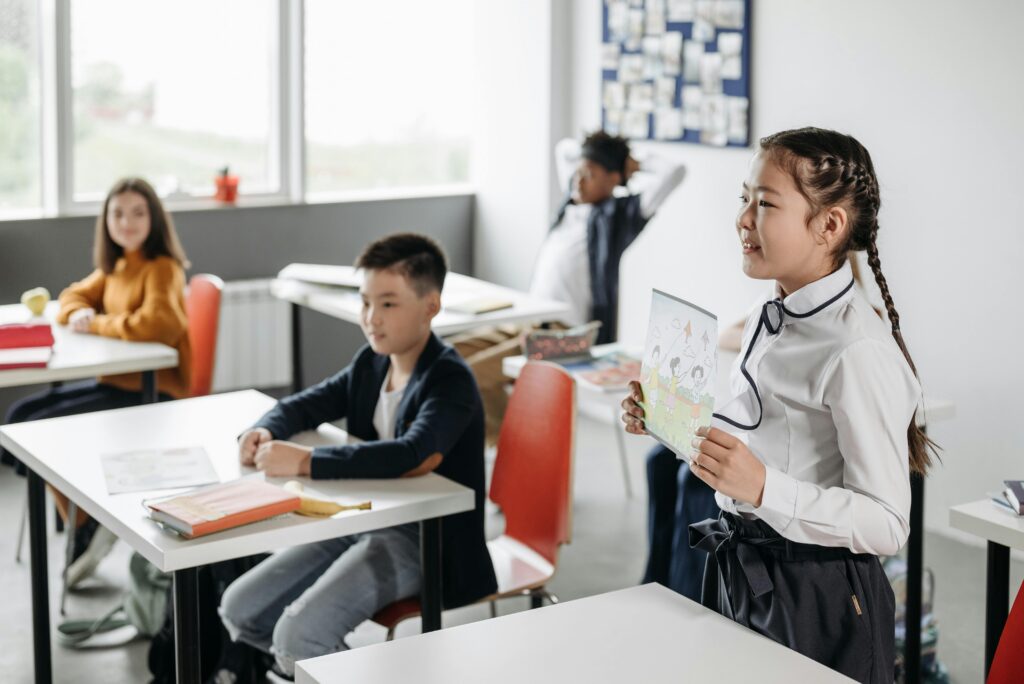
Discipline issues and behaviour issues are often a byproduct of student frustration or a simple lack of supervision in overpopulated classrooms. We have found that in smaller groups, classroom management becomes much simpler, as teachers can spot the first signs of negative student behaviour before it escalates. When classroom behaviour is quiet and orderly, students’ cognitive load is reduced, allowing them to devote their full mental energy to scientific thinking and reading comprehension. Teachers spend less time “policing” the room and more time actually teaching, which significantly improves teacher morale and the overall educational experience. Students who might otherwise be distracted by the movements or whispers of forty other peers find it much easier to enter a state of deep work with the help of visual aids and educational games. We believe that a serene environment is a prerequisite for academic excellence, and small classes provide the most consistent path to conflict resolution and focus. This sense of order is a hallmark of many private schools that prioritise educational outcomes through systemic change.
Cultivating Confidence and Psychological Safety
For many students, the fear of sounding “stupid” in front of a large group of peers is a major barrier to student achievement. We advocate for small classes because they provide a “psychological safety net,” lowering the social stakes of making a mistake. In a tight-knit group, students realise that everyone has strengths and weaknesses, which demystifies the learning process and supports students with special educational needs. As they successfully navigate challenges in this supportive setting, their self-esteem grows, eventually giving them the courage to speak up during college selection interviews later in life. We see a noticeable difference in the class engagement of students who have been nurtured in small environments; they are more inquisitive and less defensive. This internal confidence is perhaps the most valuable of the foundational skills a student can acquire, as it shapes their willingness to pursue GCSEs, A-levels, and leadership roles. By fostering a sense of belonging and celebrating cultural diversity, we empower students to view challenges as opportunities rather than threats.

Superior Long-Term Outcomes and Career Readiness
Educational research consistently suggests that the advantages of small class sizes extend far beyond the elementary years into higher education. We have noted that students from smaller classes tend to have higher graduation rates and better academic achievement on university entrance exams. The foundational skills they acquire—such as critical thinking skills, clear communication, and self-advocacy—are exactly what expert tutors and modern employers are looking for. Because they have spent years in environments that prize personalised attention and individualised feedback, these students enter the workforce ready to lead and innovate. We also see a correlation between small class experiences and higher academic results in rigorous programs such as the International Baccalaureate Diploma Programme. The support team and teacher aides available in these settings ensure that even those with special needs reach their full potential. Ultimately, the “less is more” philosophy in education pays dividends for decades after the final bell has rung, ensuring a lifetime of success.