The Singapore primary school curriculum 2025 builds on the strengths of our existing education system while incorporating new priorities such as Digital Literacy, holistic development, and future-ready skills. At the Primary Level, from Primary 1 to Primary 6, the Ministry of Education continues to refine the school syllabus so that learning outcomes remain rigorous, relevant, and aligned with global educational standards. While core subjects such as English Language, Mother Tongue Language, Mathematics, Science, Physical Education and Character and Citizenship Education remain central, there is a stronger emphasis on learning support, subject-based learning, and a holistic approach that nurtures the whole child.
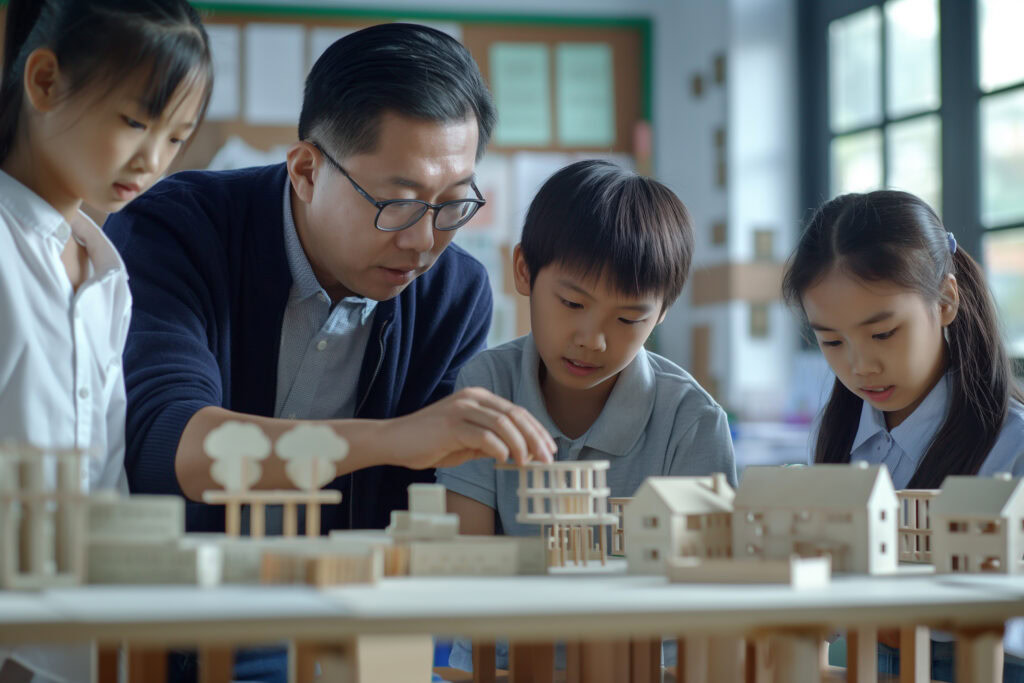
Core Subjects and the Structure of Primary Education
In the Singapore primary school curriculum, Primary education is organised across six years, broadly matching the concept of Years 1 to 6 in many international systems, and is comparable to Year 6 or Ages 11–12 in the final year of primary schooling. From Primary 1, students focus on core subjects such as English Language, Mathematics, Mother Tongue Language, and later Science, with strong attention to reading techniques, foundational numeracy, and social-emotional skills required for successful progression to Secondary 1. The curriculum is designed using a Spiral Progression approach, where key mathematical concepts and language skills are revisited at increasing levels of complexity from Primary 1 through Primary 6, ensuring that learning is deeply reinforced over time.
By the upper primary years, especially in Primary 4, Primary 5, and Primary 6, students experience a broader range of topics and more demanding learning outcomes, particularly in areas such as Number and Algebra, Measurement and Geometry, and data analysis and problem-solving. These core subjects are complemented by Learning Support Programmes for students who need additional help, reflecting the system’s commitment to inclusion and equitable access. The primary school curriculum is carefully calibrated so that the transition to the Primary School Leaving Examinations and eventually to Secondary 1 feels structured rather than abrupt.
English Language, Mother Tongue Language, and Social Studies
English Language remains the main medium of instruction and is closely aligned with high international benchmarks, including aspects of the English National Curriculum and frameworks used by curriculum bodies such as the Cambridge Primary Curriculum and the Cambridge International Programme. From Primary 1, students build a strong foundation in listening, speaking, reading and writing through a variety of texts, including stories, informational texts, and digital resources hosted on the Student Learning Space. As students move from Years 3 to 6, they encounter more complex genres, practice data interpretation in visual texts such as line graphs and pie charts, and develop effective reading strategies, including skimming, scanning, and inferential reading.
Mother Tongue Language learning continues to play a vital role in shaping identity and cultural understanding. Students study Chinese, Malay, or Tamil, depending on their home background and school offerings. The Mother Tongue curriculum emphasises real-life communication, cultural texts, and stories, supported by interactive technology and digital platforms. Social Studies, integrated across the primary school curriculum, helps students understand Singapore’s history, society, and global context, encouraging them to connect with global perspectives while remaining rooted in local values.
The Primary Maths Syllabus and Mathematical Concepts
The Primary School Math Syllabus in 2025 builds on well-established strengths while incorporating syllabus revisions that reflect contemporary needs. The curriculum is systematically organised around three broad strands: Number and Algebra, Measurement and Geometry, and Statistics and Data Analysis. From the earliest levels, children develop number sense and fluency in basic operations, working first with the 12-hour clock and later progressing to reading and using the 24-hour clock for real-life time problems.
By Primary 4–6, students explore more advanced Measurement and Geometry topics, including area, perimeter, and concepts that lead naturally to surface area and volume in later years. They learn to interpret and construct line graphs and pie charts, strengthening both numeracy and data interpretation skills. Spatial relationships are also explicitly taught, so that students develop a strong visual sense of shapes, symmetry, and position in two- and three-dimensional contexts. These mathematical concepts serve as an essential bridge to international frameworks such as the Cambridge Secondary Curriculum, Cambridge checkpoint assessments, and, eventually, Cambridge IGCSE or A-Level qualifications for students on those pathways.
Assessment, Subject-Based Banding, and the PSLE
Assessment in the primary school curriculum combines formative and summative components, with the goal of supporting learning rather than simply ranking students. The Primary School Leaving Examinations remain a key milestone in Year 6, but the system has moved away from excessive testing in the lower primary years. Subject-Based Banding allows students to take subjects at standard or foundation levels, particularly in English, Mother Tongue, and Mathematics, based on their strengths and learning pace. This approach replaces older, more rigid streaming models and creates more flexible pathways into Secondary 1.
The assessment criteria for each subject are clearly linked to learning outcomes, and parents receive increasingly detailed feedback on their child’s progress. In Mathematics, for example, assessment items test conceptual understanding, application, data analysis, and reasoning rather than rote calculation alone. The philosophy behind these reforms is consistent with global best practices and is also reflected in earlier changes, such as the 2021 curriculum updates, which placed greater emphasis on critical thinking and holistic development.
Holistic Approach, Character and Citizenship Education, and Pastoral Care
The Singapore education system takes a holistic approach, ensuring that academic development is balanced with moral, social, and emotional growth. Character and Citizenship Education is a core component of the primary school curriculum and is supported by Pastoral care structures within each school. Lessons and school programmes inculcate values such as respect, responsibility, resilience, care, and integrity, while also fostering a sense of belonging to the wider community and an understanding of global perspectives.
Beyond formal lessons, schools integrate topics such as Health Education, Values Education, and Digital Literacy into daily routines and co-curricular activities. Students discuss responsible technology use, cyber wellness, and media discernment, learning how to behave safely and respectfully in online spaces. This is complemented by a broad range of learning journey experiences, where classes visit museums, outdoor learning sites, or community organisations, connecting classroom knowledge to authentic real-world contexts.
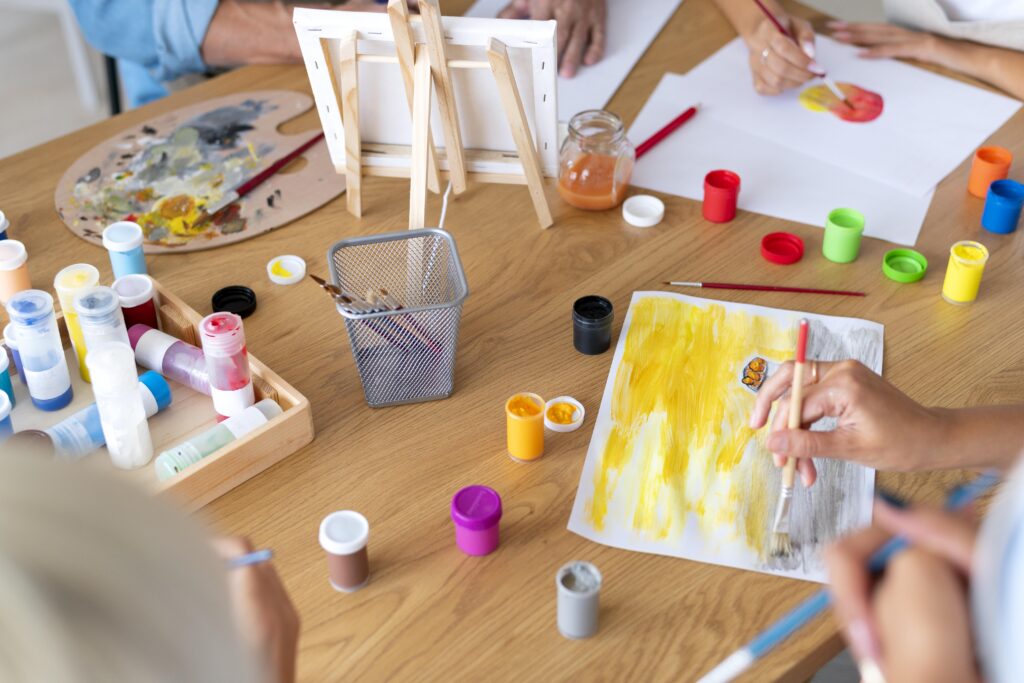
Co-Curricular Activities, Arts, and Enrichment
Co-Curricular Activities at the primary level offer students opportunities to explore interests beyond core subjects. Many schools provide sports, performing arts, uniformed groups, clubs, and societies that develop teamwork, leadership, discipline, and creativity. Programmes may include Art and Craft, Music Appreciation, Bible Knowledge in faith-based schools, or enrichment modules that support Global Perspectives and community engagement.
Some families complement school-based learning with external enrichment such as JC Literature Tuition Centres, O-level math tuition, A-level math tuition, and H2 Math tuition for older siblings, but at the primary stage, the focus remains on building confidence and foundational skills. Certain tuition centres also offer holiday tuition lessons, crash courses and specialised notes prepared by ex-MOE HODs and NIE teachers, which can support students in upper primary as they prepare for high-stakes examinations. However, the Ministry of Education continues to stress balance, well-being, and the importance of unstructured play and family time.
International Schools, Curriculum Comparisons, and Pathways Beyond Primary 6
In addition to mainstream schools, Singapore hosts a vibrant landscape of international schools and alternative programmes. Institutions such as Knightsbridge House International School, Dulwich College Junior School, and others may adopt international curricula such as the Cambridge Primary Curriculum, the Cambridge Secondary Curriculum, the IB education framework or the International Baccalaureate Primary Years Programme. These pathways often lead to Cambridge checkpoint assessments, Cambridge IGCSE qualifications, A-Level qualifications, or IB Diploma Programme options for Ages 11–16 and beyond.
Comparisons between the Singapore primary school curriculum and international benchmarks, such as the English National Curriculum or the Cambridge International Programme, show a broadly similar structure for Years 3 to 6 and the key stages for core subjects. However, Singapore’s curriculum is uniquely anchored by Character and Citizenship Education, strong emphasis on Mother Tongue Languages, and the role of national agencies such as SkillsFuture Singapore in supporting lifelong learning and future-ready skills. Students graduating from Primary 6 move on to a variety of Secondary 1 pathways, including O-level and IP tracks, as well as international programmes, depending on their interests, abilities, and school choices.
Digital Platforms, Learning Support, and Student-Centred Methodology
Technology is increasingly significant in the primary school curriculum. The national Student Learning Space provides resources, assignments, and interactive tasks that allow students to engage in self-paced and collaborative learning anytime, anywhere. Teachers use data from these platforms to refine their learning methodology, differentiate instruction, and identify students who may require additional learning support.
Learning Support Programmes in English and Mathematics are carefully structured to address gaps early, particularly in the first few years of primary education. These programmes use concrete materials, visual models, and explicit teaching of strategies to help students grasp core concepts before moving on. The emphasis on subject-based learning, paired with individualised support, ensures that students of varying abilities can achieve meaningful progress and demonstrate mastery of key skills and concepts.
School Culture, Programmes, and Practical Information for Families
Each school develops its own culture and school program within the national framework, which may include student exchange activities, international learning journeys, and community projects. Some schools with strong international links may offer short-term student exchange programmes or opportunities to gain global perspectives, even at the primary level. Parents considering specialised pathways or international programmes should pay attention to practical details, such as application deadline windows, textbook lists, and alignment between primary and secondary school offerings.
Support structures such as Pastoral care, counselling, and student support teams ensure that social-emotional needs are addressed alongside academic requirements. Many schools also conduct parent workshops on reading techniques, Digital Literacy, and supporting learning at home, helping families align their expectations and practices with the school syllabus and assessment criteria. This cohesive partnership between home and school is essential for children to thrive across Primary 1 to Primary 6 and into their secondary years.
Conclusion: A Future-Ready and Values-Centred Primary Curriculum
The Singapore primary school curriculum 2025 reflects a well-balanced blend of tradition and innovation. It retains strong foundations in English Language, Mother Tongue Language, Mathematics, and Science while systematically embedding Character and Citizenship Education, Digital Literacy, and holistic development. Through clear learning outcomes, Spiral Progression in core concepts, Learning Support Programmes, and a wide range of Co-Curricular Activities, the curriculum prepares students not only for the Primary School Leaving Examinations and Secondary 1, but also for an increasingly complex and interconnected world.
As families and educators work together within this robust education system, children gain access to rich opportunities, including learning journeys and international programmes, as well as arts, sports, and values education. Whether they continue through local secondary schools, the Cambridge International Programme, or IB education routes, students grounded in the Singapore primary school curriculum are well-positioned to pursue future studies, including A-Level qualifications, IB pathways, and beyond, with confidence and resilience.