Understanding the PSLE Exam and Why It Matters
The Primary School Leaving Examination (PSLE) is a major national examination in the Singapore education system, serving as the bridge between Primary school and Secondary School. Conducted by the Singapore Examinations and Assessment Board (often written as the Singapore Examination and Assessment Board, SEAB) under the oversight of the Ministry of Education (MOE), it marks the end of primary school education at Primary 6. This examination board develops the MOE syllabus, coordinates the PSLE Subjects, and ensures consistency and fairness across Singapore. While the PSLE is not the only path to future success, it plays a central role in the S1 posting process, where students move to Secondary 1 based on the PSLE Scoring System and PSLE Achievement Level bands. The results help determine eligibility for programmes such as Direct School Admission to specialised schools like the School of Science and Technology or NUS High School of Mathematics and Science, and in some cases, Special Assistance Plan schools. Historically, the PSLE replaced the old Standard Six Entrance Examination, aligning with broader reforms in the education system to provide a more consistent national standard. When we understand how this national examination fits within the broader pathways leading to GCE O-Level, GCE N-Levels, GCE A-Level, International Baccalaureate, and even Advanced Placement Scholastic Assessment Test routes, we can guide our children with a clearer long-term perspective and informed choices.

PSLE Exam Structure, Papers, and Core Subjects
The PSLE consists of several key components that span across English Language, Mother Tongue, Higher Mother Tongue, Mathematics, and Science, all aligned to the MOE syllabus and detailed in official documents like the Primary Science Syllabus. For English examination papers, students sit for Paper 1 and Paper 2, which typically cover Continuous Writing, Situational Writing, grammar, vocabulary, Visual text comprehension, and longer reading passages. Paper 1 focuses on writing skills, where students demonstrate their ability to craft coherent and engaging texts, while Paper 2 emphasises language use, comprehension skills, and a detailed understanding of passages. The oral components—Oral Communication and Oral Examination—along with Listening Comprehension are also essential, as they test real-world communication skills and attentive listening. Mathematics involves multiple components, such as Math Paper 1 and Paper 2, where foundational skills and higher-order problem-solving are assessed, often requiring careful reading, highlighting questions, and accurate transfer of answers to the answer sheet. Science, based on the Primary Science Syllabus, includes multiple-choice and open-ended questions that require students to apply concepts precisely. Understanding the structure across all PSLE Subjects allows us to design a targeted revision plan that gives due weight to each paper, instead of focusing only on one or two areas.
Using Official PSLE Resources, Timelines, and Support Platforms
Effective PSLE preparation begins with clarity about schedules, resources, and support. Families should regularly refer to the MOE website and SEAB announcements for the official Examination timetable, PSLE Calendar, and even forward-looking references like the Examination Calendar 2026 to understand key dates, registration deadlines, and the overall PSLE Countdown. Many schools and independent platforms compile PSLE Resources, such as PSLE Notes, topic summaries, and practice questions, often presented through a central PSLE Knowledge Hub or similar portals. These resources can be complemented by school-based briefings, where staff from the Research & Planning Department or equivalent divisions explain how the PSLE aligns with subsequent milestones like the Singapore-Cambridge GCE O-Level and Singapore-Cambridge GCE N- and N-Level examinations. Commercial platforms and edtech providers, including Superstar Teacher and services using AI-powered revision plans, support parents and students in building structured learning journeys across months. Charitable organisations and sponsors such as Micron Foundation and the Wikimedia Foundation may also support education initiatives, digital learning tools, and open-access information that indirectly benefit PSLE preparation. When we integrate official information, school guidance, independent resources, and technology, we create a robust ecosystem that supports Primary 6 learners holistically.

Building a Strategic PSLE Study and Revision Plan
A strong revision plan for the PSLE should be realistic, structured, and flexible enough to respond to a child’s progress. We can start by mapping the year using a wall calendar or digital PSLE Calendar, blocking out the Examination timetable, school tests, and key events such as mock exams or external assessments. Then, we align weekly goals with the structure of each subject: allocate specific days to focus on English Language (Continuous Writing, Situational Writing, Visual text comprehension), days for Math Paper 1 style questions and longer problem sums, and days for consolidating Science topics from the Primary Science Syllabus. To make this process more efficient, some families adopt AI-powered revision plans that use data from past practice to recommend topics, difficulty levels, and question types, ensuring practice time is maximally productive. We should set milestones, for example, “complete one full English examination Paper 2 under timed conditions” or “finish two full Science practice papers by a certain date,” and then adjust based on performance. Using PSLE Notes and a central PSLE Knowledge Hub helps keep revision materials organised, so students can quickly review summaries before school tests or mock exams. Over time, a systematic plan reduces last-minute panic and gives students the confidence that they have covered the necessary ground before stepping into the exam hall.
Excelling in PSLE English: Writing, Comprehension, and Oral Skills
Success in English Language at PSLE requires a blend of strong writing, precise comprehension, and confident speaking. In Paper 1, students must handle both Continuous Writing and Situational Writing, demonstrating control over structure, tone, audience, and purpose. For Continuous Writing, we encourage brainstorming ideas, using vivid details, and structuring the essay clearly with an introduction, body, and conclusion, while ensuring relevance to the given topic. In Situational Writing, marks depend on how well the student responds to context, follows required formats such as emails or reports, and addresses all given points—skills that mirror authentic communication in real life. For Paper 2, reading passages and Visual text comprehension tasks require students to infer meaning, interpret images, and respond in complete, accurate sentences, rather than copying large chunks of text. Oral Communication and the Oral Examination focus on reading aloud with proper expression and engaging in a conversation on a familiar topic, while Listening Comprehension tests careful attention to spoken texts, notes, and instructions. When we systematically practise these components using quality PSLE Resources—model scripts, past-year questions, and teacher feedback—we help students build the confidence needed to perform consistently well across every part of the English examination.

Mastering PSLE Math and Science: Techniques, Tools, and Worked Examples
For PSLE Mathematics, structure, precision, and familiarity with methods are crucial. Students should practise both Math Paper 1 (which is usually done without scientific calculators) and Paper 2 (where scientific calculators are sometimes allowed according to the relevant exam protocol), ensuring they understand when mental calculation, estimation, or calculator use is most efficient. A key habit is highlighting questions to identify numbers, conditions, and what is being asked, before planning the solution and transferring answers accurately to the answer sheet, often marked by Optical mark recognition in multiple-choice sections. Writing clearly with reliable tools such as Pilot Ballpoint or Zebra Sarasa pens, alongside a well-sharpened 2B pencil for shading responses and drawing diagrams, helps minimise avoidable errors during intense, timed conditions. Consider a worked example: “A school bought 120 markers for three classes. Class A used 2/5 of the markers, Class B used 1/4 of the remainder, and Class C used the rest. How many markers did Class C use?” Here, we guide students to first find 2/5 of 120, subtract to get the remainder, then find 1/4 of that remainder, and finally determine what is left for Class C—illustrating step-by-step thinking. In Science, the Primary Science Syllabus emphasises conceptual understanding and keyword-precise answers, so practising structured responses and reviewing marking schemes is vital. By combining disciplined practice with the right tools and techniques, students can significantly improve their performance in both Math and Science.
Managing PSLE Logistics: Exam Hall Protocols and Access Arrangements
Beyond academic preparation, understanding exam hall procedures and logistics is essential for a smooth PSLE experience. Students need to be familiar with exam protocol, including what to bring (such as 2B pencil, eraser, ballpoint pens, approved scientific calculators where applicable, and other stationery like Pilot Ballpoint or Zebra Sarasa pens) and what is disallowed (for example, unauthorised devices). Many schools clearly explain policies on correction tapes and how to use them correctly so that answers remain legible and scannable by Optical mark recognition systems. Students should also remember their student ID, admission slips, and simple essentials like food and hydration items for breaks to avoid fatigue during long days. Families may refer to the MOE website and school letters for guidance on Access Arrangements—for example, for students with specific learning needs or medical conditions—to ensure they can sit the national examination under fair and supportive conditions. Some candidates participate as private candidates, and they must pay special attention to registration processes, venue assignments, and the collection of results as explained by SEAB. When students and parents rehearse these logistics ahead of time—where to assemble, how to read the seating plan, how to handle last-minute nerves—the focus on exam day can remain where it matters most: answering questions carefully and accurately.

Understanding PSLE Scoring, Posting, and Future Pathways
The PSLE Scoring System is based on Achievement Levels and Achievement Level scoring, which convert raw marks into AL bands that are then combined to form the final PSLE score. These scores guide the S1 posting process into different Secondary School types, influenced by each school’s Secondary School Cut-Off Point List, which is updated regularly. The posting outcomes determine whether a student enters the Express, Normal (Academic), or Normal (Technical) course, each with its own routes towards the Singapore-Cambridge GCE O-Level, Singapore-Cambridge GCE N- and N-Level, or paths such as the Institute of Technical Education and Millennia Institute. Some students gain Direct School Admission to specific schools like the School of Science and Technology or NUS High School of Mathematics and Science, often located near key transport hubs such as Dover MRT station, based on talents beyond academics. Others may later branch into programmes such as the International Baccalaureate or overseas tracks involving the Advanced Placement Scholastic Assessment Test, depending on family plans and opportunities. Understanding how PSLE connects to the GCE O-Level, GCE A-Level, or vocational routes within the Singapore education system empowers families to see beyond immediate scores and appreciate the diversity of pathways available. This broader perspective helps reduce anxiety and encourages students to focus on building strong fundamentals and character, knowing that there are many ways to define success.
Community Support, Assistance Schemes, and Role Models
PSLE preparation also occurs within a broader social context where community organisations, assistance programmes, and role models play important roles. In Singapore, various Assistance schemes support families in need, including programmes targeted at Malay/Muslim Students and the wider Malay Muslim community to help level the playing field. Community leaders and industry professionals often run talks showcasing possible Careers in Engineering, technology, healthcare, and more, allowing students to appreciate how strong foundations in subjects like Mathematics and Science open future doors. Organisations such as the Micron Foundation sometimes support STEM outreach and school initiatives, further emphasising the value of perseverance in early national examination stages like the PSLE. Local schools like Geylang Methodist Primary School may host parent workshops to explain the PSLE Scoring System, PSLE Countdown strategies, and available PSLE Resources or PSLE Knowledge Hub references. Public figures and education leaders, including individuals like Mr Ismail Gafoor in his capacity as a community advocate and corporate leader, demonstrate how resilience and continuous learning can lead to success beyond examination scores. When families tap into these networks and support systems, students realise they are not alone on their PSLE journey, and that many groups are invested in their long-term growth.
When and Why to Sign Up for PSLE Online Tuition
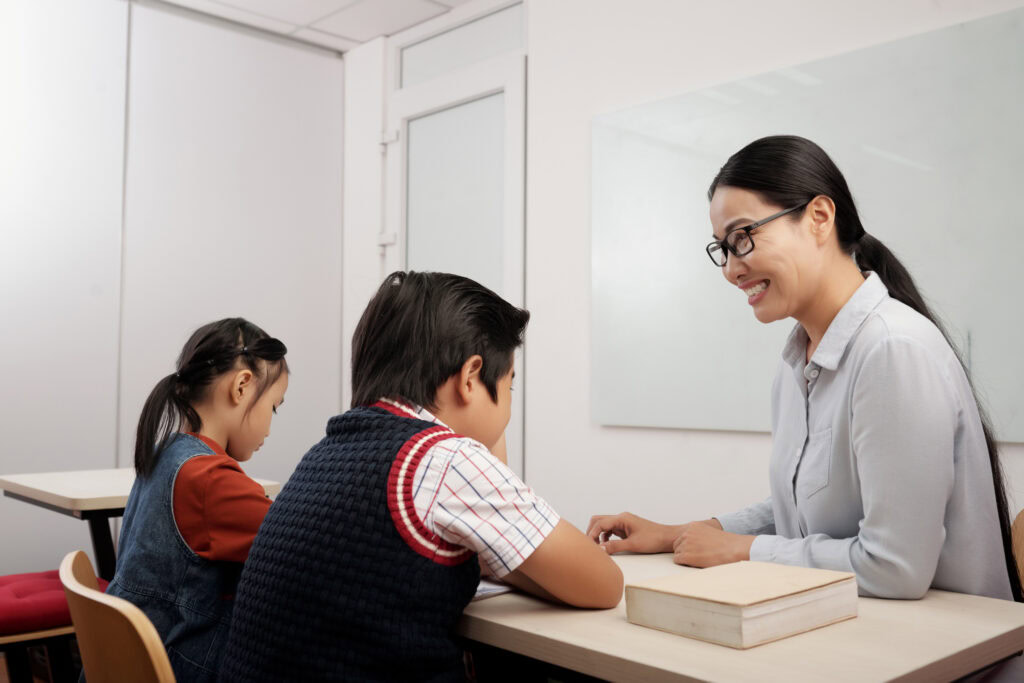
While some students navigate PSLE preparation with minimal external help, many benefit from the structure and expert guidance that targeted online tuition provides. Online platforms—such as Superstar Teacher and other services that incorporate AI-powered revision plans—can diagnose strengths and weaknesses across PSLE Subjects and tailor lessons accordingly. These systems can, for instance, highlight persistent difficulties in Continuous Writing, Situational Writing, Listening Comprehension, or specific strands of the Primary Science Syllabus, then generate targeted practice aligned with the MOE syllabus. Experienced tutors familiar with the latest requirements of the Singapore Examinations and Assessment Board guide students through exam-style questions, common pitfalls, and best practices for managing time across Paper 1, Paper 2, and oral components. In addition, online classes can simulate mock exams under realistic exam hall conditions, including strict timing, proper use of 2B pencil and ballpoint pens, and accurate shading or writing on the answer sheet. Online tuition also supports private candidates who may not have access to a regular school environment but still need structured academic and emotional guidance. If you want your child to have step-by-step, syllabus-aligned coaching, we invite you to sign up for our PSLE-focused online tuition, where we combine expert teaching, smart technology, and personalised revision plan support to help your Primary 6 child transition confidently into Secondary 1 and beyond.