The Mechanics of Repetition in Educational Methodology
When we discuss the landscape of modern pedagogy, we often find rote learning at the center of a heated debate regarding its efficacy and relevance. At its most basic level, this teaching method relies on the principle of rote memorization, where information is ingrained through consistent rote style repetition. Critics sometimes dismiss this approach as parrot fashion learning, suggesting it lacks depth, yet we recognize it as a distinct and necessary stage in the learning process. By repeatedly exposing the brain to specific data points, we create a robust memory trace that allows for instant retrieval without complex cognitive processing. We believe that before a student can engage in complex analysis, they must first possess a library of facts accessed through this specific memorisation technique. It is not merely about reciting lines; it is about encoding information so deeply that it becomes second nature.
Neuroscience and the Architecture of Memory
To understand why repetition works, we must examine the biological changes in the brain’s neural networks. When we practice rote learning, we physically strengthen neural pathways and create denser neural connections that facilitate faster signal transmission. This process is crucial for moving information from fleeting short-term memory into permanent long-term memory, a transition that is essential for enduring academic success. By automating the recall of basic facts, we free up limited working memory and conserve cognitive resources for more demanding tasks. We can draw a parallel to machine learning and artificial intelligence, where systems require vast datasets to recognize patterns; similarly, the human brain requires a database of knowledge to function optimally. We see this biological efficiency as the primary argument for maintaining rote methods alongside more progressive techniques.

Establishing Foundational Knowledge Across Subjects
We contend that foundational knowledge acts as the scaffolding upon which all higher-level intellectual structures are built. In the early years, we rely on rote methods to teach the alphabet sequence, phonics reading, and essential sight words that unlock literacy. As students progress, this extends to mastering spelling words and acquiring a robust set of vocabulary words necessary for articulate expression. In the sciences, we use these strategies to memorize the periodic table chemistry symbols, science formulae, or complex anatomy medicine terms that simply cannot be “figured out” through logic alone. Even in legal studies, the recall of specific law statutes relies heavily on these traditional memory skills. We cannot expect a student to write a complex essay or diagnose a patient if they are constantly stopping to look up basic terminology.
The Role of Mathematics and Computational Fluency
Nowhere is the value of rote memorization more apparent than in the development of computational skills and mathematical fluency. We know that mastering multiplication tables, math facts, and multiplication facts through rote practice is essential for solving more complex equations later in life. If a student struggles to recall basic math times tables, their brain is too occupied to handle multi-step word problems or algebraic concepts. While the National Council of Teachers of Mathematics and various mathematics standards emphasize conceptual understanding, they also recognize the need for procedural fluency. We believe that procedural memory—knowing how to do something automatically—supports, rather than opposes, the curriculum standards. Without this automaticity in basic arithmetic, students often hit a wall when introduced to higher-level mathematics.
Strategies for Effective Retention and Recall
We must acknowledge that not all repetition is created equal; to be effective, we must utilize evidence-based memory techniques and mnemonic strategies. We advocate spaced repetition and spaced practice, with review sessions spaced over time to combat the forgetting curve. Techniques like active recall and retrieval practice—where we force our brains to retrieve an answer without help—are far superior to passive re-reading. We can use tools such as flashcards, visual aids, and visual concept maps to make the data more “sticky” and easier to encode. Furthermore, incorporating memory games and peer teaching can transform a dry spaced review session into an engaging educational experience. By understanding retrieval principles, we can turn simple retrieval practise into a powerful engine for retaining declarative memory.
Bridging the Gap to Higher-Order Thinking
We strongly believe that the ultimate goal of education is to move beyond simple recall toward critical thinking and deep understanding. However, we argue that rote learning is not the enemy of meaningful learning; rather, it is the prerequisite for higher-order thinking and problem-solving skills. For example, one cannot analyze the socio-political impact of a war without first memorizing the historical dates and key figures involved. Similarly, understanding figurative language requires a memorized lexicon of word meanings and cultural references. We encourage an associative learning approach in which facts are first secured through rote methods, then linked to form complex ideas. By combining intelligence based learning with traditional drilling, we foster analytical thinking that is grounded in accurate facts. Active learning requires a database of knowledge to be active with.

Balancing Methods for a Complete Education
In conclusion, we view the dichotomy between rote learning and education methods focused on creativity as a false choice. A balanced teaching method integrates rote memorization for efficiency with inquiry-based learning for depth. We must ensure that students master multiplication tables and spelling words so they have the bandwidth to engage in analytical thinking and creative innovation. Whether we are discussing machine learning algorithms or human neural pathways, the principle remains: inputs determine outputs. We support curriculum standards that value problem-solving skills, but we maintain that these skills rely on a bedrock of accessible, memorized information. Ultimately, we aim to produce learners who possess both the deep understanding of an expert and the rapid recall of a well-trained mind.
How Personalized Support Enhances Core Skills
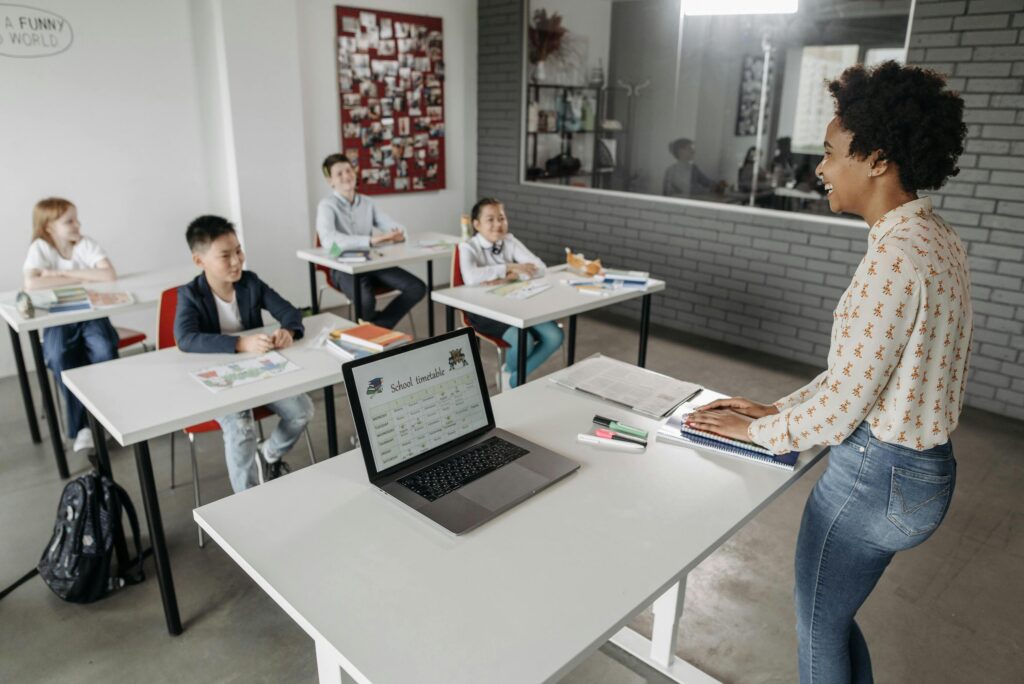
When we consider the challenges students face in mastering vast amounts of information, we see a natural synergy between classroom instruction and the focused environment of home tuition. While schools introduce concepts, dedicated time with a tutor allows for the rote practice necessary to solidify foundational knowledge, such as multiplication tables and spelling words. We find that many students thrive when they have a guide to help them navigate the repetitive nature of rote learning without the pressure of a classroom setting. A tutor can turn the sometimes tedious task of rote memorization into engaging memory games or active recall sessions, ensuring that science formulae and historical dates are not just memorized, but truly retained in long-term memory. By providing this targeted support, we empower students to build the confidence and automaticity needed to tackle complex problem-solving skills with ease. Ultimately, we believe that personalized tuition bridges the gap, transforming the struggle of memorization into a stepping stone for academic success.


