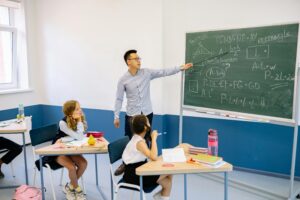
The Evolution of Tuition Culture in Singapore
The growing demand for tuition classes has significantly shaped Singapore’s modern tuition landscape. While the Singapore education system is widely recognised for its rigorous standards and strong academic outcomes, many parents still seek additional support outside the classroom. The pursuit of strong PSLE score outcomes, entry into prestigious schools, and opportunities such as the integrated programme, IP PROGRAM, or Direct School Admission pathways often motivates families to explore supplementary education options.
For many students, the tuition journey begins long before Primary 6. Some families enrol children in enrichment programmes as early as Primary 1, while others introduce additional support during Primary 3 or Primary 5 when academic expectations increase. Subjects commonly targeted include English, Chinese, PSLE Mathematics, and PSLE Science. As a result, tuition centres have expanded their offerings to cater to students at different learning levels and with different academic goals.
Parents often compare various formats, including group tuition and private one-on-one tuition. While some learners benefit from collaborative classroom discussions, others require personalised guidance to address specific weaknesses. The key consideration is whether the support improves understanding, strengthens study habits, and contributes to measurable learning outcomes rather than simply increasing instructional hours.
Understanding the PSLE Landscape and the Pressure to Seek Tuition
To appreciate why tuition has become so prevalent, we must first understand the structural pressures surrounding the PSLE. Since 2021, the Ministry of Education has used an Achievement Level (AL) scoring system with eight bands to reduce overly fine differentiation among students. Yet despite this move toward holistic assessment, the reality persists that popular secondary schools maintain competitive cut-off points. This creates an educational atmosphere where parents often feel they are running on a treadmill: if every other child appears to be receiving extra help, opting out seems like a deliberate risk. Consequently, tuition is frequently treated less as a remedy for specific academic weakness and more as a defensive strategy—a form of insurance against an uncertain outcome. We view this pattern not as evidence that tuition is universally necessary, but as a reflection of collective anxiety that can obscure a child’s actual needs.

The Official Position: Why MOE Maintains That Tuition Is Not Necessary
The Ministry of Education has consistently articulated a clear position on this issue. Senior officials have stated that Singapore’s education system is run on the basis that tuition is not necessary for students to progress and succeed. This is not an abstract ideal. In 2025, a total of 37,926 Primary 6 students sat for the PSLE, and an impressive 98.5 per cent were assessed as suitable for progression to secondary school. These results are achieved through the national curriculum, delivered by professionally trained teachers who are equipped to prepare students for examination standards. Furthermore, ministers have emphasised that students can learn how to tackle challenging PSLE questions within their regular school environment, not exclusively through private tuition. When we consider that the overwhelming majority of students advance to secondary school through standard schooling alone, it becomes empirically difficult to argue that tuition is a prerequisite for success.
Understanding Academic Challenges Beyond the Classroom
One reason some families consider SCIENCE TUITION or Mathematics Tuition is the increasing complexity of the upper-primary curriculum. In P5 Science and P6 Science, students are expected to apply advanced Science concepts rather than rely solely on memorisation. Topics within the PSLE Science syllabus often require students to analyse experiments, explain observations, and construct Structured responses using methods such as the OAC Method. Mastery of Science Topics, such as Ecological cycles, can become challenging when students struggle to connect theory with practical application.
Similarly, the Primary Mathematics programme places heavy emphasis on reasoning and analytical thinking. Students frequently encounter advanced problem sums, multi-step problem sums, bar models, working backwards, and Diagram drawing techniques. These questions assess conceptual understanding rather than procedural memorisation, making strong exam techniques and effective organisational methods increasingly important.
Beyond content mastery, success in the PSLE EXAM depends on consistent preparation. Students who regularly review past year papers, maintain error logs, utilise quality assessment books, and adopt effective assessment strategies often develop stronger exam confidence. Such practices can sometimes deliver results comparable to external tutoring when applied consistently over time.
When Tuition Provides Targeted Support Rather Than a Crutch
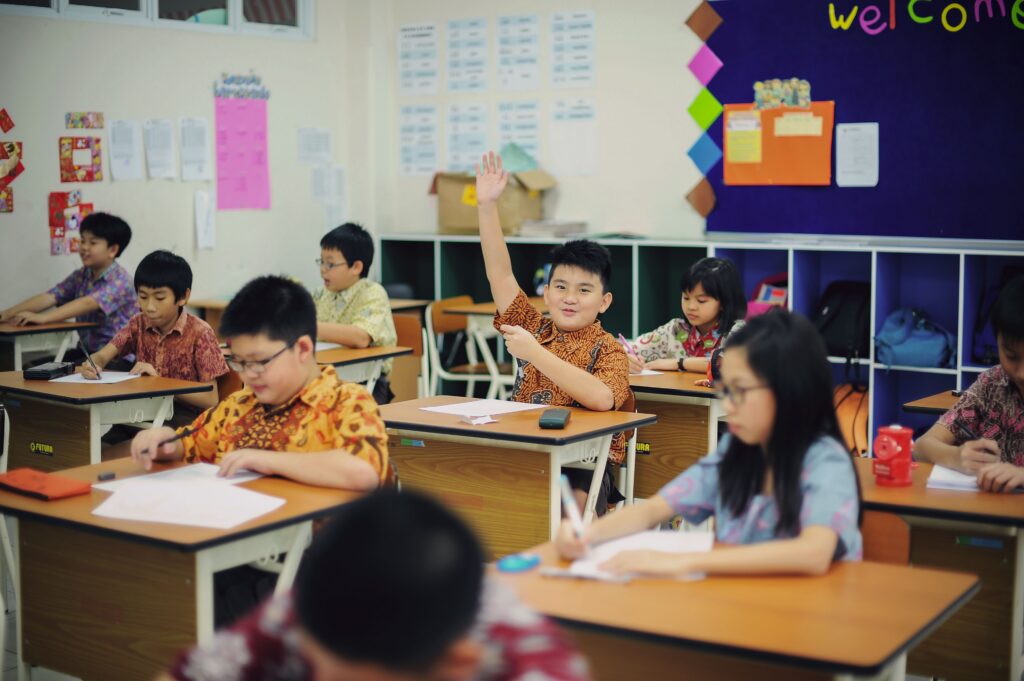
While tuition may not be necessary at the population level, we acknowledge that it can serve a legitimate, constructive role for specific learners. Education is not a one-size-fits-all process. Some PSLE students struggle with discrete, identifiable concepts—such as heuristic problem-solving in Mathematics or situational writing techniques in English—that require repeated exposure in a smaller group setting. In these cases, tuition can function like a spotlight rather than a floodlight, directing concentrated attention precisely where understanding has fractured. However, we caution against using tuition as a substitute for attentive classroom learning. When a student attends tuition simply to rehearse what was already taught in school, it often indicates a deeper issue with focus or study methodology rather than a genuine instructional deficit. We therefore regard tuition as a targeted intervention, valuable when it addresses a specific gap but redundant when it merely replicates the school curriculum.
Balancing Academic Achievement with Holistic Development
An important consideration often overlooked in discussions about the Primary School Leaving Examination is the need to balance academic excellence with overall well-being. Many students already participate in enrichment lessons, piano lessons, art classes, sports activities, and leadership programmes. Overloading children with excessive academic commitments may undermine the development of soft skills, resilience, and healthy learning habits.
In some cases, parental expectations and peer pressure contribute to the perception that every child requires tuition. This phenomenon is sometimes associated with so-called tiger parents who fear that their children may fall behind their peers. However, educational research increasingly highlights the importance of psychological safety, stress tolerance, and intrinsic motivation in supporting long-term academic learning.
Several educational providers now complement academic programmes with mindset development initiatives such as Champion Mindset Workshop sessions and learning diagnostics like Math and Science MAP. While organisations such as BlueTree Education, Ancourage Academy, Essential Education, Grade Solution Learning Centre, and F9 TO A1 ACADEMY offer specialised programmes, parents should evaluate whether these services address genuine learning needs rather than social expectations.
Ultimately, strong performance in the Primary School Leaving Exams is influenced by multiple factors, including classroom engagement, family support, consistent revision, and effective learning strategies. Whether a student aspires to attend institutions such as Catholic High or other highly sought-after schools in areas like District 20, the goal should not simply be to achieve a particular Achievement Level under the AL scoring system. Rather, parents should focus on cultivating sustainable habits that prepare children for both Secondary School and lifelong learning.

A Practical Framework for Parents Making the Tuition Decision
Ultimately, the question is not whether tuition is necessary for all PSLE students, but whether it is necessary for your child. We recommend a diagnostic approach grounded in evidence rather than social pressure. Start by analysing your child’s school examination results to identify whether weak areas are persistent and cross-validated across multiple assessments. Schedule a consultation with your child’s form teacher to gauge classroom engagement and identify any conceptual gaps despite attentive participation. If your child understands the syllabus but requires more practice, curated assessment books and school examination archives often provide sufficient material. If, however, a child consistently struggles to grasp foundational concepts even after school-based intervention, focused tuition in that specific subject may be a rational, strategic investment. Treat tuition as a deliberate prescription, not a default vitamin.
Conclusion
Tuition is neither a guaranteed passport to a top-tier secondary school nor an obligatory toll on the road to PSLE success. With 98.5 per cent of students progressing to secondary education through the public system, the data confirms that Singapore’s schools are structurally capable of delivering the requisite academic preparation. We encourage parents to resist the tuition-centric narrative and instead evaluate their child’s individual learning profile. By leveraging school-based support, fostering disciplined self-study routines, and making evidence-informed decisions, families can navigate the PSLE with confidence—free from unnecessary expense and pressure.