In the contemporary educational landscape, the question of how best to support students who fall behind their peers is more pressing than ever. As classrooms become increasingly crowded and curricula more demanding, many parents and educators are turning to personalised solutions. We must ask: is home tuition effective for struggling students? Based on extensive pedagogical research and recent educational trends in 2026, the answer is a resounding yes. Home tuition, or “high-impact tutoring,” has emerged as one of the most potent interventions for academic recovery and long-term success.
Understanding the Personalised Learning Paradigm
The primary reason home tuition proves so effective for struggling students lies in the shift from a “one-size-fits-all” model to a personalised learning paradigm. In a standard classroom, a single teacher must balance the needs of twenty to thirty students. This class size often necessitates a middle-of-the-road instructional pace, which can inadvertently leave struggling students in a “comprehension deficit.” This is especially evident among primary 3 students transitioning to more complex subjects, or among express stream students facing the rigorous demands of the secondary school curriculum.
When we implement private tuition, the educational focus shifts entirely to the individual. This one-on-one ratio allows the tutor, especially ex-moe teachers, to identify specific cognitive gaps that may have gone overlooked for years. For example, a student struggling with Sec 1 math or O-level math may actually have an underlying weakness in foundational fractions or decimals. A home tutor has the luxury of time to pause the current curriculum, address these foundational cracks, and then proceed, ensuring the student builds their knowledge on a solid base.
The Psychological Impact: Building Confidence and Reducing Anxiety
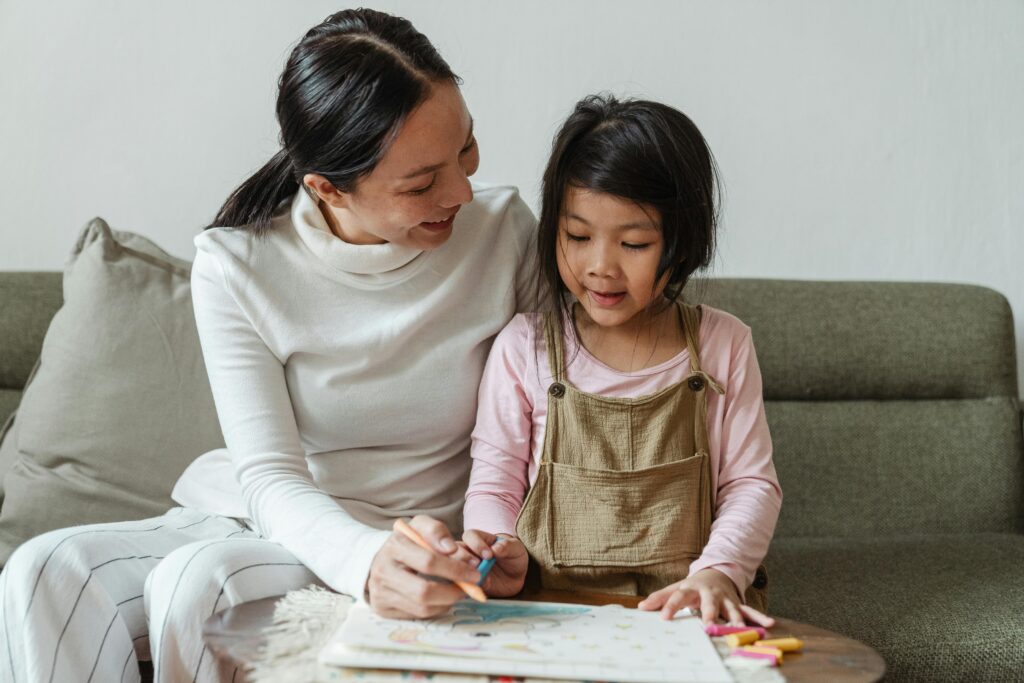
For a student who is consistently underperforming, the classroom can become a source of significant anxiety. The fear of being called upon or the embarrassment of failing a public assessment creates a “stress-response” that inhibits the brain’s ability to process new information. We observe that home tuition provides a “psychologically safe” environment, often offering much-needed mental health support through positive reinforcement.
In the privacy of their own home, students are more likely to ask “silly” questions or admit when they do not understand a concept. This lack of social pressure fosters a growth mindset. As the student begins to master small tasks through a tailored teaching methodology, their self-efficacy—the belief in their own ability to succeed—increases. This psychological shift is often the catalyst for a total academic turnaround; once a student believes they can learn, the actual process of learning becomes significantly more efficient.
High-Impact Tutoring and Academic Recovery
Recent data highlights “high-impact tutoring” as a benchmark for effectiveness. Unlike some tuition centres or large-scale structured programmes like Mind Stretcher, home tuition allows for a deep-dive diagnostic assessment to pinpoint weaknesses. Research suggests that for tutoring to be truly effective for struggling students, it must be consistent and frequent.
| Immediate Feedback | Errors are corrected in real-time, preventing the reinforcement of wrong methods. |
| Customized Pacing | Instruction moves according to the student’s learning speed. |
| Curriculum Alignment | Tutors reinforce specific o-level mathematics or a level math topics. |
| Distraction-Free Environment | Minimizes the sensory overload often found in busy school settings. |
We find that students receiving consistent home tuition—typically two to three sessions per week—show learning gains that far exceed those of their peers who rely solely on classroom instruction. This “dosage” of focused attention acts as an accelerant, often helping sec 3 students bridge learning gaps before they reach junior college.
Overcoming the “Passive Learning” Trap
Many struggling students develop a habit of “passive learning” in a classroom setting—nodding along without truly internalising the material. Home tuition necessitates interactive learning. In a one-on-one setting, the student cannot hide; they must participate, explain their reasoning, and demonstrate their work.
This active involvement is crucial for developing critical thinking skills. Tutors do not just teach what to learn; they provide academic coaching on how to learn. They might implement the Feynman technique or the SQ3R method to ensure deep understanding. Furthermore, they help students develop time management and better study habits by incorporating spaced practice and the PQ4R method. These study skills and revision skills serve the student long after the specific tutoring sessions have ended, providing them with a toolkit for lifelong academic independence.
Addressing Unique Learning Needs and Neurodiversity
For students with learning disabilities, such as a language processing disorder or other learning challenges, the standard classroom can be particularly challenging. Home tuition allows for differentiated instruction that adapts to a student’s specific learning style. By utilising the VARK model, a tutor can determine if a student is among the visual learners, auditory learners, or kinesthetic learners and adjust the materials accordingly.
A tutor can use hands-on experiments for a student who needs science tuition centre-level engagement or utilise a vast question bank of GCE O-level math questions for drill-based mastery. While tuition options like revision workshops or centres with small class sizes offer some peer interaction and resources and facilities like interactive whiteboards, they often lack the extreme flexibility in schedule availability and customisation found in home-based private tuition.